Physical Address
304 North Cardinal St.
Dorchester Center, MA 02124
Physical Address
304 North Cardinal St.
Dorchester Center, MA 02124
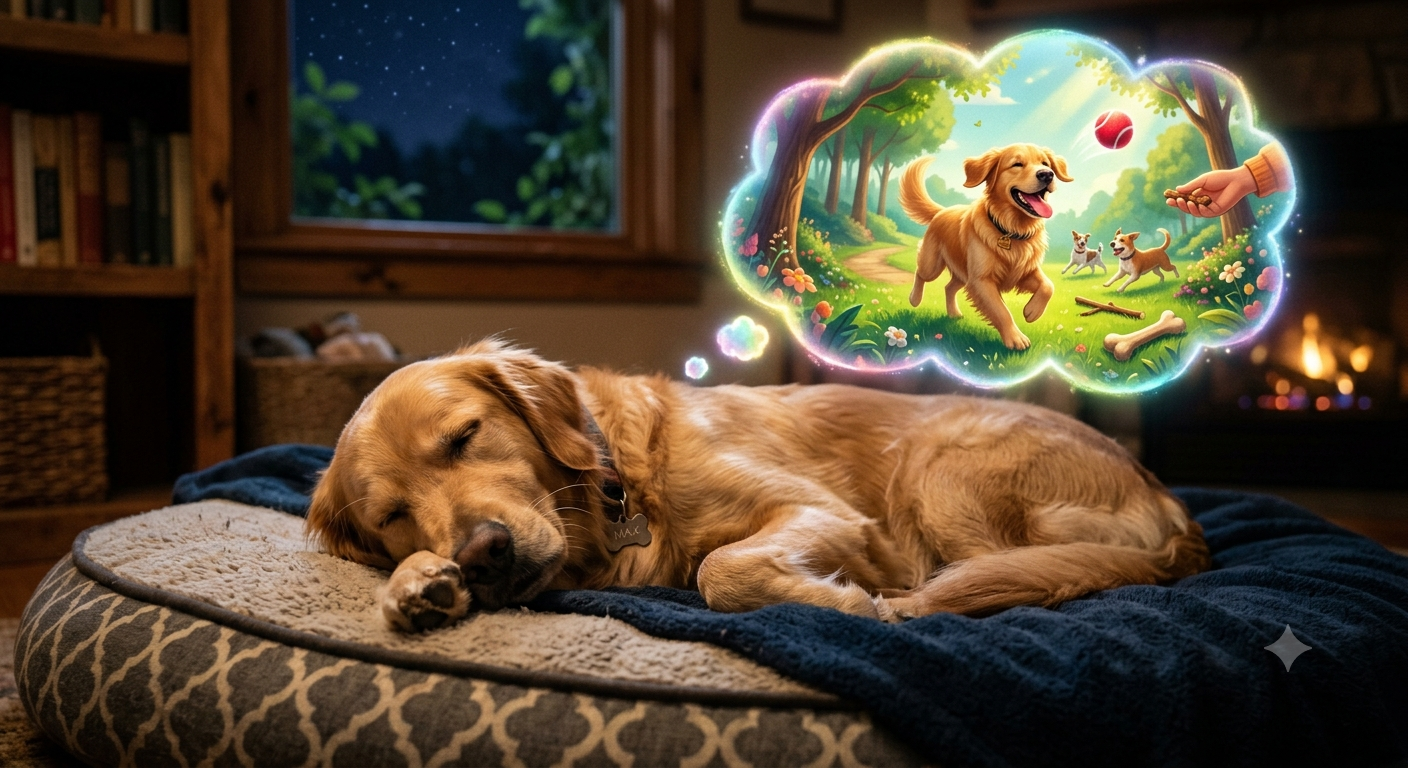
Have you ever watched your dog twitch, wag its tail, move its paws, or make soft barking sounds while sleeping? These behaviors often make pet owners wonder, what do dogs dream about?
Although scientists can’t ask dogs what they see in their dreams, research suggests that dogs likely dream in ways that are similar to humans. Their dreams may involve everyday experiences, favorite activities, familiar people, and even other animals.
In this article, we’ll explore what science says about dog dreams, why dogs move while sleeping, and what those nighttime behaviors might mean.
Yes, researchers believe that dogs do dream.
Like humans, dogs experience different stages of sleep, including Rapid Eye Movement (REM) sleep. During REM sleep, the brain becomes highly active, and this is the stage when dreaming is most likely to occur.
Scientists have observed that dogs show brain activity during REM sleep that resembles the brain activity seen in dreaming humans. This strongly suggests that dogs experience dreams.
While no one can know exactly what a dog dreams about, experts believe their dreams are often based on daily experiences.
A dog’s dreams may include:
Just as people often dream about events from their day, dogs are thought to replay experiences that are meaningful to them a process neuroscientists call hippocampal replay, first demonstrated in landmark MIT research on sleeping animals.
Twitching is one of the most common signs that a dog may be dreaming.
During REM sleep, you might notice:
These movements are generally normal and are believed to be connected to dream activity.
It’s possible.
Just as humans sometimes have unpleasant dreams, dogs may also experience dreams that seem frightening.
A nightmare could involve:
Signs that a dog might be having a bad dream include:
However, it’s impossible to know exactly what the dog is dreaming.
In most cases, it’s best not to wake a dog that appears to be dreaming.
A dog may become briefly confused or startled if awakened suddenly.
Instead:
Most dreams only last a short time.
Research suggests that all dogs dream, but the frequency may vary.
Puppies often dream more because their brains process large amounts of new information every day.
Older dogs may also dream more frequently as they revisit long-term memories.
Dogs that spend more time playing, training, or exploring may have more vivid dream experiences because they experience more daily stimulation.
Dog dreams are generally shorter than human dreams.
Many dreams may last only a few seconds to a couple of minutes.
Smaller dogs often have:
Larger dogs typically:
These differences are related to normal sleep patterns rather than intelligence.
Many owners notice their dog “running” while asleep.
This movement may reflect dream activity involving:
Although it looks amusing, these movements are usually a normal part of REM sleep.
Many scientists believe they probably do.
Because dogs form strong emotional bonds with people, their dreams may include:
Owners play a major role in a dog’s daily life, making them likely characters in their dreams.
Common signs include:
These behaviors are usually harmless.
Quality sleep supports your dog’s overall health.
Here are a few tips:
A well-rested dog is often healthier and happier.
False.
Scientific research strongly suggests that dogs experience dreams during REM sleep.
False.
Small movements during sleep are usually normal.
However, repeated violent movements or unusual episodes should be discussed with a veterinarian.
Not necessarily.
Although dogs likely dream, their experiences are probably based on canine senses, memories, and daily activities rather than human thoughts.
| Sleep Stage | What Happens |
|---|---|
| Light Sleep | Body begins relaxing |
| Deep Sleep | Muscles recover and energy is restored |
| REM Sleep | Brain activity increases and dreaming is most likely |
| Waking | Dog becomes alert and responsive |
Understanding these stages helps explain why dogs sometimes move while sleeping.
Although we may never know exactly what dogs dream about, scientific evidence strongly suggests that they experience dreams much like humans do. Their dreams are likely shaped by everyday experiences, favorite activities, familiar places, and the people they love. The next time you see your dog twitching, wagging its tail, or softly barking while asleep, there’s a good chance it’s simply dreaming about another exciting adventure. Giving your dog plenty of exercise, mental stimulation, and a comfortable place to rest can help support healthy sleep and sweet dreams.
Do dogs dream every night?
Most researchers believe dogs dream regularly, especially during REM sleep. The exact frequency varies depending on the dog’s age, size, and activity level.
Can dogs have nightmares?
They may. Although it’s impossible to know for certain, dogs can appear distressed during sleep, suggesting they sometimes experience unpleasant dreams.
Why does my dog bark while sleeping?
Soft barking during sleep is usually a normal part of dreaming and often occurs during REM sleep.
Should I wake my dog if it’s moving a lot while sleeping?
Generally, no. It’s usually better to let your dog wake naturally unless there are signs of a medical emergency.
Do puppies dream more than adult dogs?
Puppies are believed to dream more often because their brains process many new experiences while they grow and learn.
