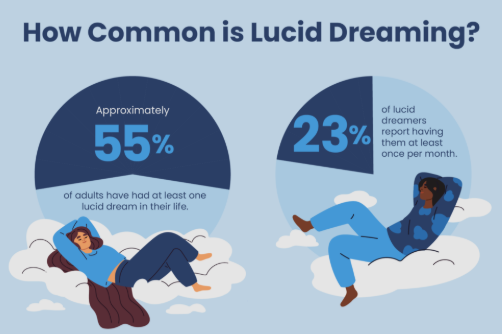
Many people wake from a vivid dream with a strange feeling of awareness. They knew they were dreaming yet the experience felt real emotional and meaningful. This moment often leads to one question. What does this actually mean for the mind and mental health?
Lucid dreams sit at the crossroads of neuroscience psychology and personal belief. They can feel empowering unsettling or deeply reflective depending on the person and life context. Understanding them requires clarity not fear and curiosity not fantasy.
What Is the Lucid Dream Meaning
The lucid dream meaning refers to a mental state where a person becomes aware that they are dreaming while the dream is still happening. This experience has been studied in psychology sleep science and behavioral research and it reflects how consciousness and dreaming can briefly overlap.
Awareness during sleep A lucid dream occurs when the mind recognizes the dream as a dream. The body remains asleep but awareness increases.
Connection to self awareness Lucid dreams often appear in people who are reflective emotionally aware or mentally curious. The dream mirrors inner awareness rather than external events.
Brain activity explanation Research shows parts of the brain linked to thinking and decision making become active during these dreams while sleep continues.
Not a supernatural experience Lucid dream meaning does not involve prophecy or hidden messages by default. It is a natural cognitive phenomenon.
Emotional processing role These dreams may help the mind process stress fear creativity or unresolved emotions in a safe internal space.
Control is not required Many lucid dreams involve awareness without control. This is normal and still meaningful.
Mental health perspective Lucid dreams are not a disorder. They only matter clinically if they disturb sleep or emotional balance.
History of Lucid Dreams
The history of lucid dreams shows that this experience is not a modern trend or a product of internet culture. Humans have noticed and described awareness during dreams for thousands of years across cultures philosophies and scientific traditions.
Ancient origins Early references to lucid dreaming appear in ancient Indian texts where awareness during dreams was linked to self knowledge and consciousness training.
Greek philosophy Greek thinkers such as Aristotle described moments when dreamers realized they were dreaming which shows early recognition of lucid awareness.
Eastern contemplative traditions Tibetan and Buddhist practices explored dream awareness as part of long term mental discipline focused on insight and mindfulness.
Medieval observations During the medieval period scholars documented dreams where awareness appeared but lacked scientific explanation.
Modern scientific naming The term lucid dream was formally introduced in the early twentieth century to describe conscious awareness within dreams.
Laboratory validation In the late twentieth century researchers confirmed lucid dreaming in sleep laboratories using eye movement signaling.
Contemporary research Today lucid dreams are studied to understand consciousness memory emotional regulation and the sleeping brain.
How Lucid Dreams Differ From Regular Dreams
Lucid dreams and regular dreams may feel similar on the surface but they involve very different levels of awareness and mental engagement. Understanding these differences helps clarify why lucid dreams feel more intense meaningful or memorable.
Level of awareness In regular dreams the dreamer remains unaware that they are dreaming. In lucid dreams the dreamer recognizes the dream state while still asleep.
Thinking ability Regular dreams follow a passive storyline. Lucid dreams activate parts of the brain linked to reasoning reflection and choice.
Emotional clarity Emotions in regular dreams often feel confusing. Lucid dreams allow clearer observation of feelings as they arise.
Memory retention Lucid dreams are usually remembered more clearly because awareness strengthens memory encoding.
Sense of presence Lucid dreams feel more vivid and grounded. Regular dreams often fade quickly after waking.
Control is optional Regular dreams offer no control. Lucid dreams may involve some choice but control is not required for the dream to be lucid.
Aspect
Regular Dreams
Lucid Dreams
Awareness
No awareness of dreaming
Awareness of dreaming
Brain activity
Emotional and imaginative
Emotional plus reflective
Memory
Easily forgotten
Often clearly remembered
Emotional insight
Unclear or symbolic
Observed consciously
Mental role
Passive experience
Active awareness
The Science Behind Lucid Dreaming
The science behind lucid dreaming explains how the sleeping brain can briefly regain awareness without fully waking the body. This phenomenon has been studied using sleep labs brain imaging and cognitive research. Lucid dreaming is often studied as part of altered states of consciousness where awareness shifts without full wakefulness.
Occurs during REM sleep Lucid dreaming happens during rapid eye movement sleep. This stage supports vivid dreaming emotional processing and imagination.
Partial brain awakening During a lucid dream areas of the brain responsible for self awareness and decision making become active while the body remains asleep.
Role of the prefrontal cortex Studies show increased activity in the prefrontal cortex which controls reflection reasoning and conscious thought.
Blend of sleep and wakefulness Lucid dreaming represents a hybrid state. The brain combines dream imagery with waking awareness for a short time.
Stable physiological state Heart rate breathing and muscle relaxation remain consistent with sleep even though awareness increases.
Memory involvement Heightened awareness strengthens memory formation which explains why lucid dreams are often remembered clearly.
Not a disorder From a scientific view lucid dreaming is a natural variation of consciousness not a mental health condition.
REM Sleep and Conscious Awareness
REM sleep plays a central role in how conscious awareness can emerge during lucid dreams. This sleep stage creates the biological conditions that allow dreaming and awareness to briefly coexist.
REM sleep supports vivid dreaming REM sleep is the stage where dreams become emotionally rich visual and story driven. The brain becomes highly active even though the body stays relaxed.
Muscle paralysis protects the body During REM sleep the brain temporarily blocks muscle movement. This prevents the dreamer from acting out dreams while awareness increases internally.
Emotional brain activation Areas linked to emotion memory and imagination are highly active during REM sleep which explains the intensity of dream experiences.
Return of conscious awareness In lucid dreaming the brain regions responsible for self awareness partially reactivate allowing recognition of the dream state.
Balance between sleep and wakefulness The mind becomes aware without fully waking. This balance explains why lucid dreams feel real but controllable.
Short and unstable state Conscious awareness during REM sleep is fragile. Strong excitement often ends the dream by waking the person.
Psychological significance This awareness reflects the mind observing itself which is a key marker of cognitive maturity and insight.
Common Triggers and Causes
Lucid dreams do not happen randomly. They usually emerge when certain biological psychological and environmental factors align. Understanding these triggers helps explain why lucid dreams appear at specific times in life.
Irregular sleep patterns Changes in sleep timing frequent awakenings or inconsistent schedules increase REM sleep intensity which raises the chance of lucid awareness.
Heightened self awareness People who reflect deeply think creatively or practice mindfulness often notice lucid dreams more easily.
Emotional stress or transition Periods of stress grief growth or major life changes can trigger lucid dreams as the mind processes emotional material.
Frequent vivid dreaming Individuals who naturally experience strong dream imagery are more likely to become aware during dreams.
Sleep interruption and return Waking briefly during the night and falling back asleep can increase conscious entry into REM sleep.
Mental rehearsal and focus Thinking about dreams before sleep increases cognitive engagement and awareness during dreaming.
Neurological sensitivity Some brains shift between sleep and wakefulness more easily which supports lucid states.
Benefits of Lucid Dreaming
Lucid dreaming offers several potential benefits when it occurs naturally and does not disrupt sleep quality. From a mental health and psychological perspective these benefits relate to awareness emotional processing and cognitive flexibility. Neuroimaging research supported by the National Institutes of Health shows increased awareness related brain activity during lucid dreams.
Improved self awareness Lucid dreaming strengthens the ability to recognize thoughts emotions and internal states. This awareness can carry into waking life.
Emotional regulation Becoming aware during a dream allows the mind to observe fear anxiety or sadness without being overwhelmed by it.
Reduction of recurring nightmares Some individuals naturally reduce nightmare intensity once awareness develops during dreams.
Enhanced problem solving Lucid dreams provide a safe mental space where the brain explores ideas scenarios and solutions creatively.
Increased creativity Artists writers and thinkers often report novel insights because the dreaming mind connects ideas freely.
Sense of confidence Awareness during dreams can increase feelings of control and resilience especially during stressful life phases.
Memory and reflection Lucid dreams are remembered more clearly which supports reflection and personal insight.
Mind body connection These dreams highlight how awareness and rest can coexist without harm.
Lucid Dream Research
Lucid dream research has grown steadily over the past few decades as scientists explore how awareness can arise during sleep. This research combines neuroscience psychology and sleep medicine to understand consciousness more clearly.
Laboratory confirmation Researchers have confirmed lucid dreaming in sleep labs by tracking eye movement signals given by dreamers during REM sleep.
Brain imaging studies Neuroimaging shows increased activity in brain regions linked to self awareness decision making and reflection during lucid dreams.
REM sleep focus Most studies agree lucid dreaming occurs during REM sleep when dreaming is most vivid and emotionally active.
Consciousness research value Lucid dreams help scientists study consciousness without waking the body which is rare in neuroscience.
Memory and cognition findings Research suggests lucid dreams involve stronger memory encoding compared to regular dreams.
Mental health investigations Studies explore lucid dreaming for nightmare reduction emotional processing and stress regulation though results remain individualized.
No evidence of harm Current research does not classify lucid dreaming as dangerous when it occurs naturally.
Ongoing scientific interest Lucid dreaming continues to inform broader questions about awareness identity and the sleeping mind.
Levels of Lucid Dreaming Experience
Level
Experience Stage
Core Characteristics
Psychological Insight
Frequency
1
Early Awareness
The dreamer may not clearly remember lucid dreams but occasionally senses brief awareness or questioning within a dream.
Awareness flickers without stability. The mind begins noticing the dream state but quickly returns to passive dreaming.
Common
2
Developing Awareness
The dreamer recognizes dreams more often and may attempt small intentional actions but awareness fades easily.
Cognitive awareness strengthens. The brain starts integrating reflection into REM sleep.
Less common
3
Stable Lucidity
The dreamer maintains awareness longer and can intentionally respond to dream scenarios with clarity and calm.
Emotional regulation and metacognition improve. The dreamer observes thoughts without losing the dream state.
Uncommon
4
Advanced Mastery
Lucidity feels natural and sustained. The dreamer navigates dreams with presence rather than force or control.
High integration of awareness and rest. Often linked to long term mindfulness or contemplative practices.
Rare
Frequently Asked Questions About Lucid Dreams
Is lucid dreaming safe for mental health
Lucid dreaming is generally safe when it occurs naturally. It only becomes a concern if a person intentionally disrupts sleep or feels anxious or exhausted afterward. Healthy sleep balance matters more than dream control.
Can everyone experience lucid dreams
Most people can experience brief lucid awareness at least once in their lifetime. Frequency varies based on sleep patterns emotional awareness and individual brain differences.
Does lucid dreaming mean better control over dreams
Control is not required for lucid dreaming. Awareness alone defines the experience. Many lucid dreams involve observation rather than action.
Are lucid dreams connected to spirituality
Some cultures interpret lucid dreams spiritually while psychology views them as a state of awareness. Both perspectives can coexist without conflict depending on personal belief.
When should someone be concerned about lucid dreams
Concern is appropriate only if lucid dreams interfere with rest emotional stability or daily functioning. In such cases improving sleep habits is more important than interpreting meaning.