Physical Address
304 North Cardinal St.
Dorchester Center, MA 02124
Physical Address
304 North Cardinal St.
Dorchester Center, MA 02124
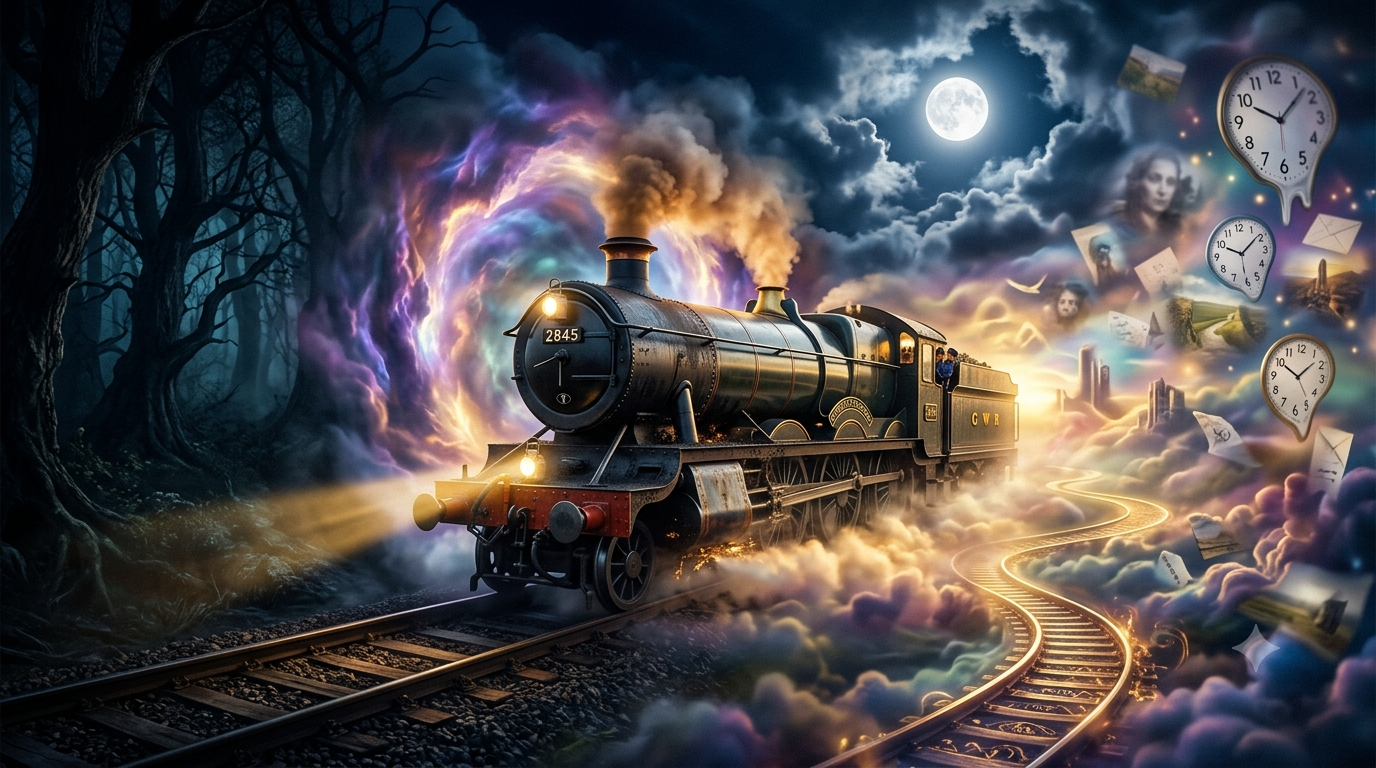
You’re standing on a platform, and the train is pulling away without you. Or you’re inside it, watching the world blur past a window, unable to get off no matter how badly you want to. Train dreams show up more often than people realize, and they tend to stick with you longer than most other dream themes.
There’s a reason for that. Trains carry a specific kind of symbolism — movement you don’t fully control, a set path, other passengers along for the ride. Your brain doesn’t pick this symbol by accident.
Here’s a full breakdown of what train dreams tend to mean, the most common scenarios, and what the research actually says about why we dream about them at all.
Dream researchers have long pointed out that vehicles in dreams tend to represent how we feel about the direction of our lives. Cars usually reflect a sense of personal control you’re behind the wheel, choosing the route. Trains work differently. You’re a passenger on a fixed track, moving toward a destination that’s mostly out of your hands.
This distinction matters. Psychologists who study dream symbolism, including those working in the tradition of Carl Jung, have noted that dreams often use transportation as a stand-in for a person’s sense of agency, or lack of it, in waking life. A train specifically tends to surface when someone feels like they’re on a set path a job, a relationship, a life stage that they didn’t fully choose, or can’t easily step off of.
That said, dream interpretation isn’t an exact science, and modern sleep researchers are cautious about claiming any single symbol has a fixed, universal meaning. Context matters. What’s happening in the dream, and what’s happening in your life at the time, shapes the meaning far more than the train itself.
This is one of the most frequently reported train dreams, and it usually shows up during periods of anxiety about missed opportunities. You’re running, the doors are closing, and you can’t make it in time.
This scenario often surfaces when someone feels behind — on a deadline, a career milestone, or a personal goal they measure against other people’s timelines. It’s less about the train itself and more about the feeling of time slipping away faster than you can keep up with.
Feeling unable to get off a moving train is a common anxiety dream, often tied to situations in waking life where someone feels trapped — a job, an obligation, or a commitment they can’t easily exit.
Unlike missing the train, this scenario is about being inside something you didn’t sign up to stay in. It often points to a feeling of being carried along by circumstances rather than actively choosing them.
Not all train dreams involve stress. A calm train ride, especially one where you know where you’re headed, tends to reflect a sense of stability and forward motion in life. This scenario often shows up during periods of steady progress — a new job, a relationship settling into a good rhythm, or a project finally moving forward after a slow start.
This is one of the more unsettling train dreams, and it usually reflects a fear that something stable in your life is at risk of falling apart. It doesn’t necessarily mean something bad is about to happen. More often, it reflects underlying anxiety about a situation that feels precarious, even if things look fine on the surface.
This scenario often comes up when someone feels like they’re observing life happen rather than participating in it. It can reflect a sense of hesitation, or the feeling of watching an opportunity move on without acting on it in time.
Realizing mid-dream that you’re headed in the wrong direction is a common variation, and it typically reflects doubt about a current path — a job, a relationship, or a decision that feels increasingly like the wrong fit.
From a psychological standpoint, train dreams are often grouped with other ‘loss of control’ dreams, a category that includes falling, being chased, and losing teeth. Researchers who study anxiety-themed dream content have found these dreams tend to increase during periods of stress, transition, or major decision-making.
Trains specifically add a layer that other loss-of-control dreams don’t: other people. A train is shared. You’re not alone on the track. This can make train dreams feel less isolating than something like a falling dream, but it can also introduce a theme of comparison — watching other passengers seem more certain of their destination than you are.
Outside of psychology, many spiritual and symbolic traditions treat trains as a metaphor for life’s journey and destiny. A train moving forward is often read as a sign of progress or momentum. A stopped or reversing train can symbolize hesitation, or a need to revisit something left unresolved.
Some interpretations focus on who else is in the dream. Traveling with familiar people may point to shared direction or support in a current life phase. Traveling alone might reflect a period of independent decision-making or isolation.
These interpretations vary quite a bit across cultures and belief systems, so they’re best treated as one lens among several rather than a fixed rulebook.
It’s worth being honest about the limits here. There’s no large-scale scientific study specifically proving that “trains mean X” in dreams. Dream symbolism research generally focuses on broader patterns — for example, studies on dream content consistently find that anxiety-themed dreams (falling, being chased, missing something important) spike during periods of real-life stress, regardless of the specific object involved.
So while a missed train and a missed flight might carry slightly different emotional textures, the underlying psychological driver — anxiety about time, opportunity, or control — tends to be the more scientifically supported thread than the specific vehicle itself.
| Scenario | Common Interpretation |
|---|---|
| Missing the train | Anxiety about missed opportunities or falling behind |
| Stuck on a train that won’t stop | Feeling trapped in a job, relationship, or obligation |
| Smooth ride to a known destination | Stability and forward progress |
| Train derailing or crashing | Fear that something stable is at risk |
| Watching a train pass by | Hesitation or missed action |
| Being on the wrong train | Doubt about a current path or decision |
Train dreams tend to show up when life feels like it’s moving on a track you didn’t fully choose whether that’s a good thing or a source of anxiety depends on the rest of the dream. Missing the train, feeling stuck on one, or watching it pass by all point to different relationships with control and timing in your waking life. As with most dream symbols, there’s no single fixed meaning. The train is just the vehicle. What matters more is how it made you feel, and what part of your life it might be echoing
Do train dreams mean something is wrong in my life?
Not necessarily. Many train dreams reflect ordinary stress or transition rather than a serious warning. Context and how you felt during the dream matter more than the train itself.
Why do I keep having the same train dream?
Recurring dreams, including train dreams, often point to an unresolved feeling or situation that hasn’t been fully processed. If the dream repeats, it may be worth reflecting on what’s currently unresolved in your life.
Is missing a train dream more common during stressful periods?
Anecdotally and according to general dream-anxiety research, yes. Dreams involving missed deadlines, transportation, or being late tend to increase during periods of real-life pressure or time-sensitive decisions.
Does the destination in the dream matter?
Some interpretations place weight on whether the destination is known or unknown. An unknown destination can reflect uncertainty about the future, while a known one may reflect clarity about where you’re headed in life.
