Physical Address
304 North Cardinal St.
Dorchester Center, MA 02124
Physical Address
304 North Cardinal St.
Dorchester Center, MA 02124
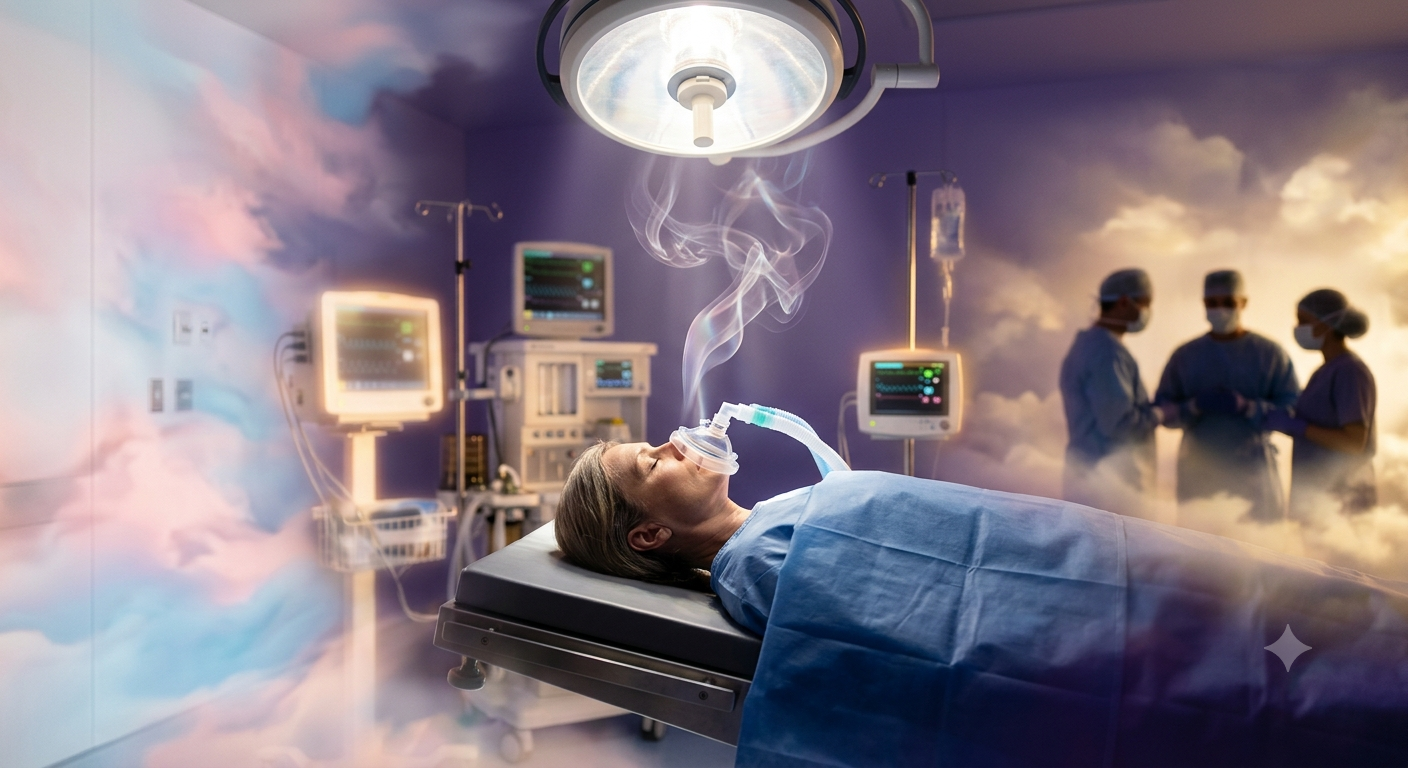
You go under, someone counts backward from ten, and the next thing you know, you’re waking up in recovery. No dreams, no sense of time passing, nothing. But sometimes people do report dreaming during surgery — vivid, strange, sometimes unsettling. So which is it? Do you dream under anesthesia, or not?
The short answer: usually, no. But it’s more complicated than a flat yes or no, and the details are actually pretty interesting.
General anesthesia isn’t just a deeper version of sleep. It’s a different state altogether.
When you fall asleep naturally, your brain moves through distinct stages — light sleep, deep sleep, and REM sleep, where most dreaming happens. Your brain stays active throughout the night, just in a different pattern than when you’re awake.
Anesthesia works differently. It suppresses brain activity directly, using drugs that interrupt communication between different brain regions. Consciousness essentially shuts off. There’s no gradual drifting the way there is with natural sleep — one moment you’re aware, and the next you’re not.
Because general anesthesia suppresses the very brain activity associated with dreaming, most people don’t experience dreams during a standard surgical procedure. Your brain isn’t cycling through REM sleep. It’s in a much more suppressed, controlled state.
If anesthesia blocks dreaming, why do so many people swear they had a dream during surgery?
A few things are usually going on.
They weren’t fully under the whole time. Anesthesia isn’t always one flat level from start to finish. As you’re going under, or as you’re coming out of it, your brain passes through lighter stages where dream-like activity is more possible. Many “surgery dreams” happen during this transition — right at the edges of anesthesia, not in the deep middle of it.
Sedation isn’t the same as general anesthesia. Some procedures use sedation rather than full general anesthesia. Sedation keeps you relaxed and often unaware, but your brain isn’t as deeply suppressed. This makes dream-like experiences more likely, since your brain still has some room to generate imagery.
Certain drugs are more likely to cause this. Not all anesthetic drugs behave the same way. Ketamine, for example, is well known for producing vivid, dream-like, sometimes disorienting experiences, separate from the drowsy blackout feeling of other anesthetics. If ketamine was part of your anesthesia mix, a strange dream is much more likely.
Memory can play tricks. Sometimes what feels like a dream during surgery is actually your brain filling in a gap. You lose consciousness, wake up later, and your mind stitches together a narrative to make sense of the missing time. It can feel exactly like a dream, even if nothing was technically happening in your brain during that gap.
People who do report dreaming under anesthesia often describe it differently than a regular night’s dream.
Common themes include:
Unlike typical dreams, which often have some narrative structure, anesthesia-related dreams tend to feel more fragmented. There’s rarely a clear beginning, middle, and end. It’s more like flashes of sensation than a full story.
This is a different (and more alarming) question than dreaming, and it’s worth addressing directly, since people sometimes confuse the two.
Anesthesia awareness waking up partially during surgery is real, but rare. The American Society of Anesthesiologists has published clinical guidance on intraoperative awareness, including risk factors and monitoring strategies used to prevent it.
This is different from dreaming. Anesthesia awareness involves some level of consciousness, sometimes with an inability to move or speak, which is understandably distressing. Dreaming, on the other hand, doesn’t require any awareness of your surroundings at all — it’s your brain generating internal imagery while you remain fully unconscious.
Anesthesiologists take awareness seriously and use monitoring tools to track brain activity and adjust anesthesia levels throughout a procedure, specifically to prevent this from happening.
Not directly, but the length and type of anesthesia used can matter.
Longer surgeries sometimes involve more careful adjustment of anesthesia depth, which can create more of those in-between moments where dream-like activity is possible. Shorter procedures with lighter sedation may actually make dreaming more likely than longer ones with deep general anesthesia, simply because your brain isn’t pushed as far down into unconsciousness.
The specific combination of drugs used also plays a bigger role than the surgery type itself. Anesthesiologists tailor drug combinations to the person and procedure, which means two people having similar surgeries could have very different experiences afterward.
Yes, and this ties directly into why some people believe they dreamed.
Coming out of anesthesia often involves a period of grogginess, confusion, and sometimes brief hallucination-like experiences, especially in the first few minutes after waking. This is sometimes called emergence delirium, and it’s more common in children than adults, though it can happen at any age.
During this period, thoughts can feel jumbled, and it’s easy to mistake this confusion for a dream you just had. Your brain is essentially rebooting, and things don’t always feel linear right away.
Studies on anesthesia and dreaming have found that reported dream rates vary quite a bit depending on the type of anesthesia and how researchers ask the question. Some studies report dream recall in a relatively small percentage of patients, often under 10%, while others — particularly involving specific drugs like propofol — report higher rates.
The overall pattern researchers have found is consistent with what’s described above: dreaming is more associated with the lighter edges of anesthesia, specific drugs known for vivid effects, and the recovery period, rather than the deep, stable middle portion of a properly maintained general anesthetic.
| Question | Answer |
|---|---|
| Do you dream during deep general anesthesia? | Rarely — brain activity needed for dreaming is suppressed |
| Can you dream while going under or waking up? | Yes, this is the most common time dream-like experiences occur |
| Does sedation cause dreaming more than general anesthesia? | Often, yes |
| Is anesthesia awareness the same as dreaming? | No — awareness involves consciousness, dreaming doesn’t |
| Which drug is most linked to vivid dreams? | Ketamine |
Most of the time, anesthesia doesn’t give you room to dream. It shuts consciousness down too completely for that. But the edges of the experience going under, coming out, or being on lighter sedation leave just enough room for your brain to generate something dream-like. If you’ve ever woken up from surgery convinced you had the strangest dream of your life, you’re not imagining it. You just caught your brain in one of the few moments anesthesia couldn’t fully keep it quiet.
Is it normal to dream during surgery? It’s not the most common experience, but it’s not abnormal either. Dreaming is more likely during lighter stages of anesthesia rather than deep unconsciousness.
Why did I have a nightmare after surgery? This is often linked to specific anesthetic drugs, the confusion during emergence, or stress and anxiety about the procedure itself, which can shape the tone of any dream-like experience.
Can anesthesia cause vivid or disturbing dreams? Yes, particularly with drugs like ketamine, or during the transition into and out of unconsciousness.
Does everyone dream under anesthesia? No. Most people report no memory of dreaming at all, since deep general anesthesia suppresses the brain activity dreams require.
